Cape Cod Beaches
Cape Cod Beach Guide
Wellfleet Beaches ~ Cape Cod
 Marconi Beach
Wellfleet, MA 02667
- Lifeguard
- Public Restroom
- Showers
- Permitted Parking
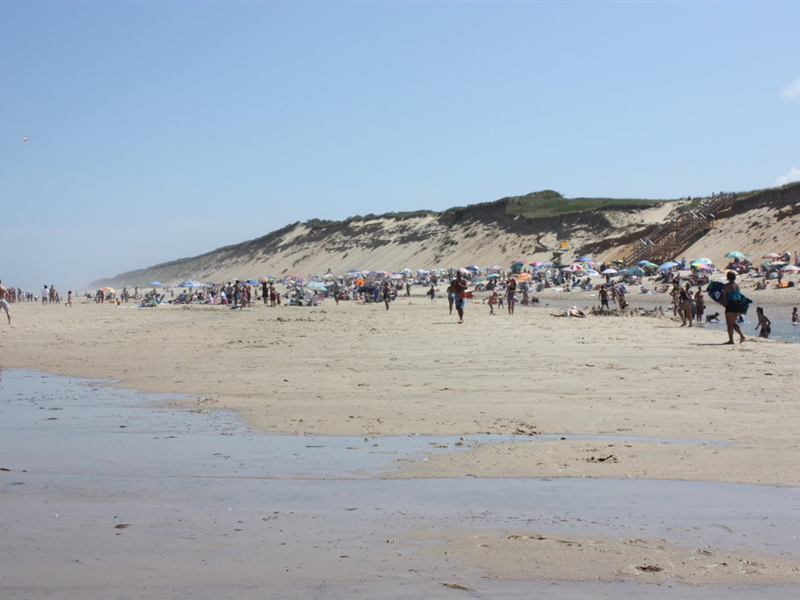
Marconi Beach in Wellfleet is one of the premier destinations within the Cape Cod National Seashore.
1. Landscape and Atmosphere
The beach is backed by massive, steep sand cliffs (coastal bluffs) that rise about 50 feet above the Atlantic Ocean.
The View: Before heading down to the sand, an observation platform atop the bluff provides a sweeping panoramic view that spans across the Outer Cape, offering clear sightlines of the Atlantic Ocean to the east and Cape Cod Bay to the west.
The Beach: A large wooden stairway leads visitors down the face of the bluff to a wide, flat beach.
Because the sandy shoreline stretches uninterrupted for miles in both directions, it is a favorite spot for walkers looking to escape the busier sections and find a sense of solitude.
2. Recreation and Activities
Surf and Swim: As an ocean-side beach facing the open Atlantic, Marconi is a major hub for surfing, boogie boarding, and skimboarding.
It features a consistent beach break that functions year-round, though it is particularly popular in the late summer months. Wildlife: Gray seals are an incredibly common sight just off the shoreline, frequently popping their heads up past the breakers (which can sometimes challenge local surfcasters targetting striped bass and bluefish). Note: Because seals are active in these waters, seasonal shark safety guidelines are always strictly posted.
Stargazing: Due to its remote location and minimal light pollution, the beach boasts a Bortle Scale Class 3 rating, making it one of the premier night-time stargazing locations in Eastern Massachusetts.
3. Historical Significance
The beach is named after the Italian inventor and Nobel Prize laureate Guglielmo Marconi.
The First Transatlantic Wireless Message: In 1901, Marconi purchased a plot of barren, elevated oceanfront land here to construct a massive wireless transmitting station.
On January 18, 1903, the site made history when it successfully transmitted the first public two-way wireless communication between the United States and Europe—a message from U.S. President Theodore Roosevelt to King Edward VII of the United Kingdom. The "Voice of America": For 15 years, the station operated on the bluff, utilizing massive 210-foot wooden towers and a roaring 25,000-volt spark-gap transmitter that could be heard miles downwind. The station played a critical role in early maritime safety, including relaying the distress signals that aided the rescue of Titanic survivors in 1912.
Erosion and Military Use: The operation was moved to Chatham in 1917, and the site later became part of Camp Wellfleet for military artillery testing.
Today, much of the original footprint of the towers has been lost to the natural cliff erosion of the Outer Cape, but the National Park Service maintains a historical pavilion and interpretive display near the overlook detailing the history of the site.
4. Logistics & Seasonal Info
Passes & Fees: Daily vehicle entrance fees or an annual Cape Cod National Seashore pass (or America the Beautiful interagency pass) are required for access during the season.
Amenities: The National Park Service maintains a large parking area, seasonal restrooms, outdoor showers, and a bottle-filling water station at the site.